


How Mobile Apps Can Transition From In-App to Web Subscriptions (Post-Epic Ruling)


The shift is here: native payments are out, web subscriptions are in.
For more than a decade, subscription-based mobile apps were locked into Apple and Google’s native in-app payments (IAPs). That meant:
Paying a 15–30% platform fee
Limited control over pricing and subscription management
Zero visibility into why users cancel
No ability to run personalized churn-reduction flows
But the Epic v. Apple and Epic v. Google rulings changed everything. Apps can now legally guide US-based users to purchase and manage subscriptions on the web — a pattern known as web deflection.
This shift to web payments removes App Store/Google Play fees and unlocks full retention tooling through solutions like ProsperStack.
In this guide, we’ll cover:
Why apps are moving away from IAP
What the Epic rulings actually permit
How top apps already use web deflection
A step-by-step migration plan
How to maximize retention with web-based cancellation flows
Benefits of web deflections over in-app payments
Moving subscriptions to the web means more control and more revenue.
These are the top three reasons you should take advantage of web deflection:
1. Save 15–30% of revenue instantly
In-app purchases typically cost 15–30% of subscription revenue. That fee applies to every renewal, not just the first payment.
Web payments through providers like Stripe, Braintree or Paddle usually cost around 2–3%.
For subscription businesses operating at scale, the difference is immediate and material.
2. Understand why users are cancelling
When your users cancel through Google and Apple’s native subscription UI, you get no context.
You don’t know whether they left because of price, missing features, low usage, a competitor or something else. You also can’t intervene at the moment of cancellation.
Web-based subscription management allows you to collect structured cancellation reasons and understand real churn drivers.


3. Reduce churn up to 39% at the point of cancellation
With in-app subscriptions, you have very limited retention options around cancellation. You can’t offer pauses, downgrades, targeted discounts or personalized surveys.
On the web, those constraints disappear. Tools like ProsperStack give you:
Personalized retention offers, including coupons, pauses and plan changes
Real-time winback workflows
Segmented churn analytics
These simply aren’t possible inside native in-app purchase systems.

What changed after the Epic v. Apple and Epic v. Google rulings
In practical terms, the ruling allows apps serving U.S. users to:
Link from the app to an external website to purchase subscriptions
Let users manage subscriptions on the web
Use external payment processors
As long as required wording and placement guidelines are followed, directing users to the web is compliant.
This is the foundation that makes web deflection viable.
What web deflection looks like in practice
Web deflection means separating presentation from payment.
The app still shows plans, pricing and upgrade prompts
Tapping a call-to-action opens a secure web flow
The web handles checkout, upgrades, downgrades and cancellations
From the user’s perspective, the experience remains cohesive. From the business’s perspective, control shifts back to the product team.

Example: how modern apps handle web subscriptions
Many subscription apps already follow this pattern:
The in-app paywall presents subscription options
Selecting a plan opens a web checkout in an in-app browser
Users can pay with Apple Pay, Google Pay or credit card
After purchase, the app reflects the upgraded status.
The app remains the primary interface. The web handles the transaction.
Step by step: transitioning from in-app to web subscriptions
Step 1: Build a web checkout
Create a secure checkout using a web billing provider such as Stripe, Recurly, Braintree, or Paddle.
At a minimum, support:
Credit cards
Apple Pay (where available)
Google Pay (where available)
Authentication should be seamless so users don’t need to re-enter credentials.
Step 2: Keep your existing in-app paywall
You don’t need to redesign your paywall. In most cases, the only change is what happens when a user taps the primary button.
Instead of triggering an in-app purchase, the button opens your web checkout.
Step 3: Open checkout in an in-app browser
Use platform-approved tools:
SFSafariViewControlleron iOSChrome Custom Tabs on Android
This keeps the experience fast and familiar while meeting platform requirements.
Step 4: Move cancellations to the web
With in-app purchases, cancellations happen entirely outside your product. You lose the chance to learn or respond.
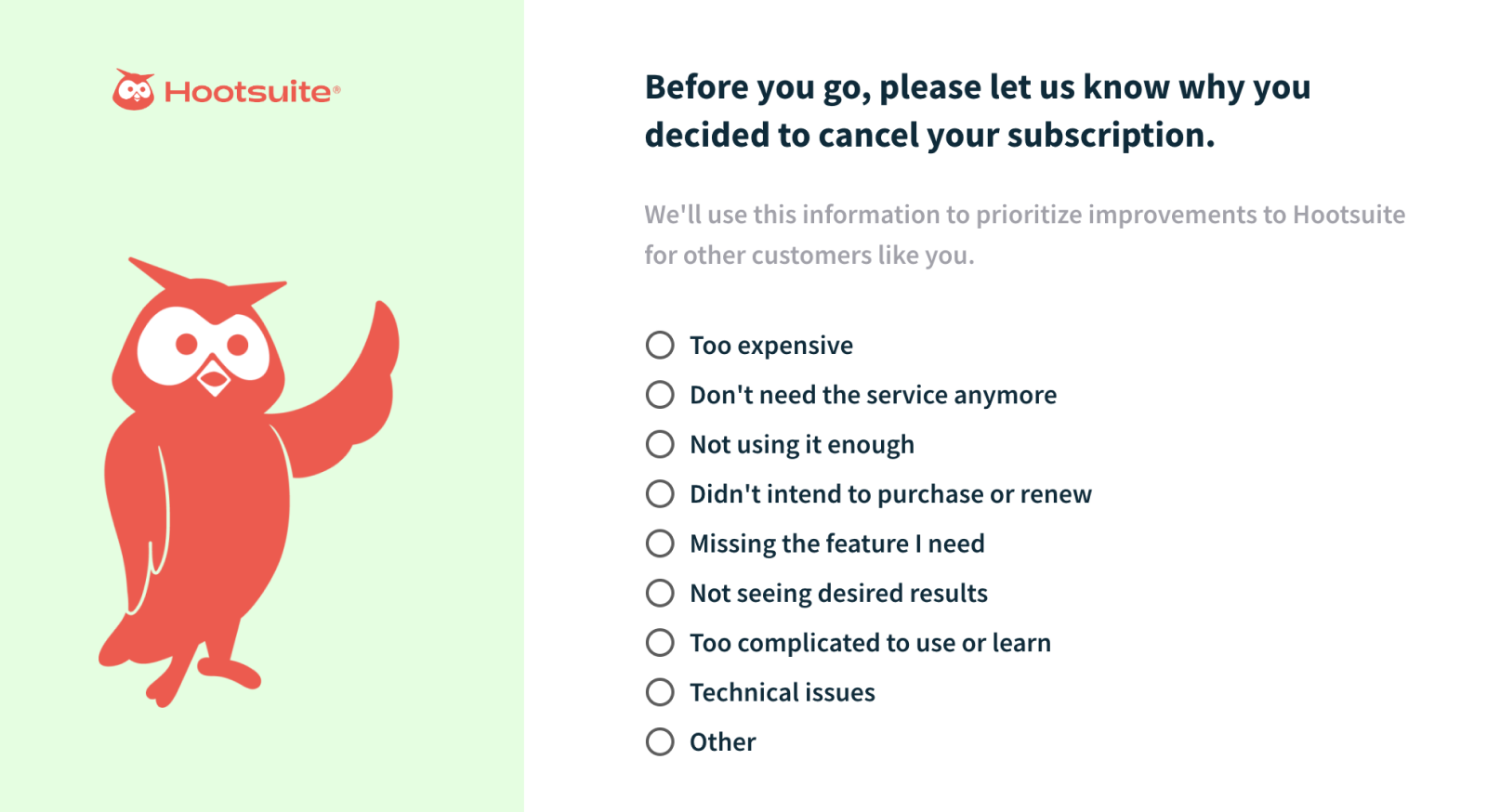
With web billing, your app can route users to a browser-based cancellation flow instead. This allows you to:
Ask why they’re canceling
Offer pauses or downgrades
Present targeted retention offers
Capture structured churn data
This single change often delivers the biggest retention impact.
How to maximize retention with ProsperStack cancellation flows
Web billing creates the opportunity. ProsperStack is what turns that opportunity into measurable results.
Trusted by brands like Nutrafol, Nestle and Hootsuite, ProsperStack is churn-busting cancellation flow software with robust reporting, A/B testing and AI offer optimization.
Teams using web subscriptions with ProsperStack can:
See exactly why users cancel
Present personalized offers based on tenure, usage or plan
Test which offers actually reduce churn
Trigger automated win-back campaigns
Track revenue saved from retained subscribers
Instead of treating cancellations as a dead end, they become a moment for learning and recovery.
And because we integrate with your subscription billing platform, you can be up and running with just a few lines of code.
Upgrade your cancel button and start retaining more subscribers, automatically.
Conclusion
The shift from in-app purchases to web subscriptions is more than a billing change. It’s a structural improvement.
Apps that make the transition gain:
Lower transaction costs
Better visibility into churn
More flexibility in how subscriptions are managed
Access to modern retention tools
The Epic rulings opened the door. Web deflection lets teams walk through it.
For subscription apps focused on long-term growth, moving billing and cancellations to the web is increasingly becoming the default—not the exception.


