


New York City's Click-to-Cancel Rule: What Retention Teams Need to Know


New York City's click-to-cancel rule is now in effect. If you offer consumer subscriptions in NYC, use this guide to review your signup disclosures, notices, and cancellation process.
Since October 1, 2026, New York City's rule has required covered subscription businesses to provide straightforward cancellation. It also sets requirements for the terms customers see at signup and the notices they receive before certain renewals or changes.
For retention teams at ecommerce, SaaS, and digital media businesses, the work extends beyond adding a cancel button. Your enrollment channels, billing schedules, and retention offers all need to support the customer's ability to cancel.
Disclaimer: This article provides general information for educational purposes and does not constitute legal advice. Consult your legal or compliance team when implementing subscription policies and practices. Research reviewed October 2026.
Overview of the rule
The rule applies to covered automatic renewal and continuous service offers to consumers. Automatic renewal extends a subscription after a defined term; continuous service continues until the customer cancels. The requirements appear in Part 8 of Chapter 5, Title 6 of the Rules of the City of New York.
In summary, covered businesses must:
Present material subscription terms clearly before requesting consent or billing information.
Provide simple cancellation through the required channels.
Allow customers to cancel without obstruction or unreasonable delay.
Send notices for qualifying renewals, trials, and material changes.
The city rule sits alongside New York State's automatic renewal law. Have your legal team check both when reviewing your subscription experience; the city rule is the source for the requirements explained here.
he exemptions cover specified government-franchised services, Department of Financial Services-regulated entities and their subsidiaries or affiliates, licensed security alarm operators, banks and certain other licensed financial institutions, and sellers or administrators of service contracts defined by New York Insurance Law. Final rule, section 5-110.3.
These exemptions are narrower than their labels suggest. Before treating a business or product as exempt, have counsel compare its licensing, regulator, and corporate relationships against the rule’s exact wording.
Subscription signup and the rule
Customers need to understand the subscription before agreeing to it. Review the offer where consent is requested, including mobile checkout and any phone or in-person enrollment.
Clear and conspicuous disclosures
Before requesting consent or billing information, disclose:
The product or service subject to renewal.
The charge amount and frequency.
The deadline for preventing further charges.
The available cancellation mechanisms.
Present these terms clearly and close to the consent request. For a voice offer, the terms must be presented close in time to that request. If the offer includes a free gift, trial, or temporary price, explain how and when the price changes and what the subsequent prices will be.
Affirmative consent
The rule also addresses products sent without affirmative consent to an automatic renewal or continuous service agreement: those products are treated as unconditional gifts, with no obligation to pay for or return them.
Check that your enrollment process records the customer's agreement to the subscription. Clear disclosures and a consent record should be reviewed together.
Notices
The rule requires notices under three conditions:
Longer subscriptions: If the initial paid term is at least one year and renews for a paid term of at least six months, send notice 15 to 45 days before the cancellation deadline.
Free gifts or trials: If the free period lasts more than a month and is followed by subscription charges, send notice 3 to 21 days before the cancellation deadline for the first paid period.
Material changes: For changes to subscription terms, including price increases, send notice at least 5 business days, but no more than 30 days, before the change.
Use the customer's selected notification channel. Renewal and trial notices must include cancellation instructions.
For renewal and trial reminders, schedule against the cancellation deadline. Check whether your billing system uses the charge date instead, particularly after a pause, plan change, or trial extension.
Subscription cancellation and the rule
Cancellation must be simple, as easy to use as the mechanism used to consent, and available through the same medium. Businesses must also offer cancellation through every medium they use to obtain consent to the subscription or a price increase.
Online and other cancellation methods
An online subscriber must be able to cancel online. If your business also accepts consent by phone, include phone cancellation in your review. For in-person enrollment, the rule requires an online option, such as a website or email, as well as a similar in-person method where practical.
Map each consent channel to its cancellation options. Then check the account page and support instructions so customers can find and use those options.
Retention offers during cancellation
Businesses may present discounts, retention benefits, or information about the effects of cancellation. These cannot impose unreasonable or unlawful conditions, obstruct cancellation, or unreasonably delay it.
As a practical design recommendation, keep the cancellation action visible and feedback optional. Test the path for a customer who declines every offer and skips the survey. Have legal review the actual screens and behavior, including active test variants.
Enforcement and refunds
DCWP enforces the rule, with civil penalties starting at $525. The rule also makes a business found in violation liable for subscription charges after the consumer's first cancellation attempt.
Follow your cancellation test into the billing system. Verify that the request was processed and that the confirmation and subsequent charges match the outcome.
Get compliant with ProsperStack
ProsperStack supports straightforward cancellation with its Instant cancel step, alongside targeted retention offers, customer feedback, and offer testing. This lets your team give customers a clear way to leave while offering relevant alternatives to those who want them.
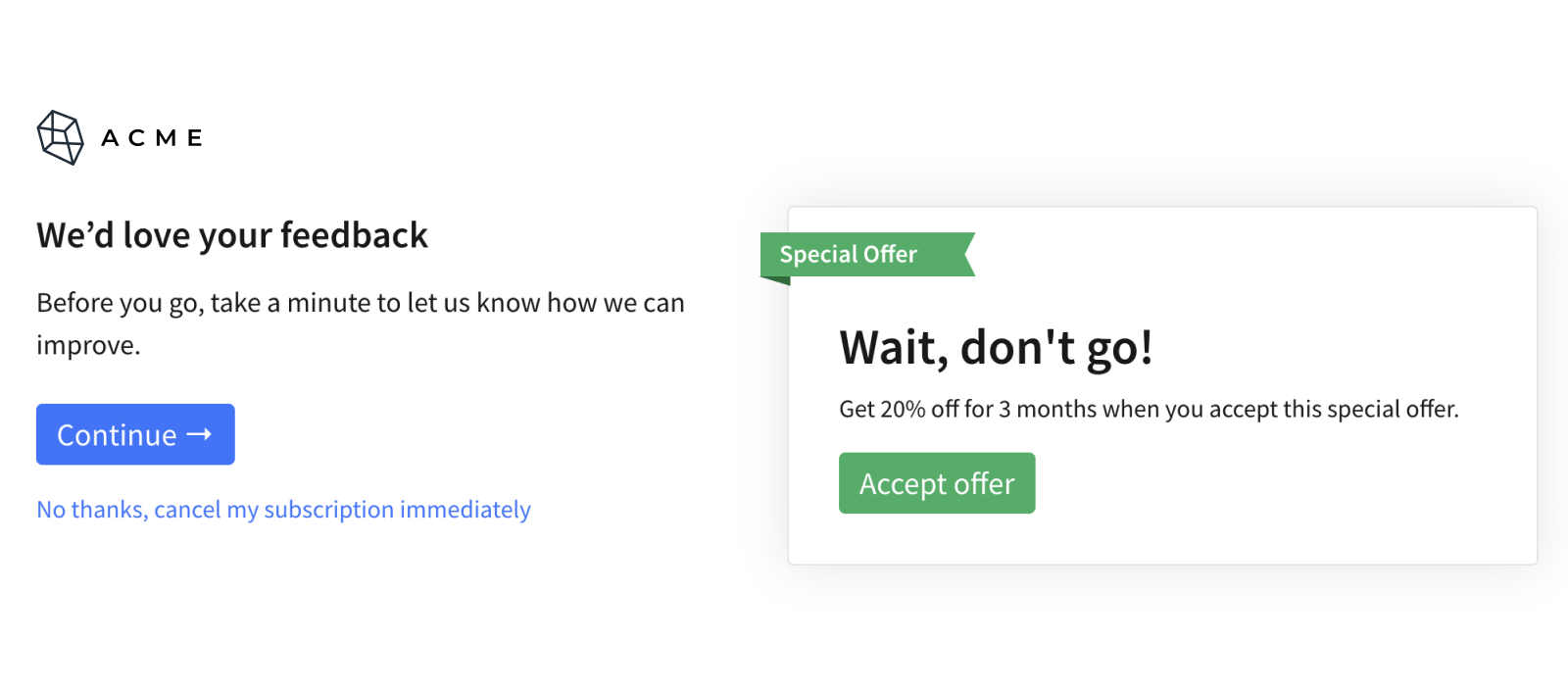
ProsperStack also supports one-click cancel: a persistent link that lets subscribers cancel immediately from any step in your cancellation flow. You can enable it for all subscribers or specific customer segments.

ProsperStack's cancellation flows help teams present targeted alternatives, collect feedback, and test offers. Supported subscription actions vary by platform. Your legal team should review the configured experience, and your team should verify its billing behavior.
Get a demo to see how ProsperStack can support your cancellation program.
Check your readiness
Answer yes or no for each question. Every “no” is something to change. The rule has been in effect since October 1, 2026.
Who the rule covers
1. Do you sell subscriptions that renew automatically or continue until cancelled to consumers in New York City?
The rule: The rule covers automatic renewal and continuous service offers to consumers, for any type of goods or services.
How to comply: If yes, keep going.
2. Have you confirmed that none of the rule’s exemptions apply to your business?
The rule: The exemptions cover services provided under a government franchise, businesses regulated by the New York Department of Financial Services and their affiliates, licensed security alarm operators, banks and other licensed financial institutions, and certain service contracts under New York Insurance Law. The city chose not to exempt telecom and wireless providers.
How to comply: If no, have your lawyer check your licenses, regulators and corporate relationships against the rule’s wording before you treat any plan as exempt.
Signup
3. Before customers enter billing details, does signup show the product, each charge amount, how often you charge and the deadline to cancel to avoid charges?
The rule: You must show the key terms clearly before you ask for consent or billing information, close to where the customer agrees.
How to comply: If no, show these details together next to the consent button. Have your legal team confirm the full list of required details.
4. If you offer a free trial, free gift or introductory price, does signup say when the price changes, how, and what it changes to?
The rule: For trials and temporary prices, signup must explain how and when the price changes and what customers will pay afterward.
How to comply: If no, add the later price and the date it starts next to the offer.
5. If you sell subscriptions by phone, do agents give the key terms right before asking the customer to agree?
The rule: For phone offers, the terms must come close in time to the request for consent.
How to comply: If no, update call scripts so agents read the terms just before asking for agreement.
6. Do you keep a record of each customer’s agreement to the subscription?
The rule: If you send products without the customer’s clear agreement to a subscription, they count as unconditional gifts. The customer doesn’t have to pay for or return them.
How to comply: If no, record the customer’s agreement in every signup channel.
Notices
7. For plans with a paid first term of a year or more that renew for six months or more, do you send a notice 15 to 45 days before the cancellation deadline?
The rule: These renewals need a notice in that window, counted from the cancellation deadline.
How to comply: If no, schedule the notice from the cancellation deadline, not the charge date.
8. For free trials or gifts that last more than a month, do you send a notice 3 to 21 days before the cancellation deadline for the first paid period?
The rule: Longer trials need a notice in that window before charges start.
How to comply: If no, add a notice timed from the cancellation deadline.
9. Do customers hear about price increases and other material changes at least 5 business days, and no more than 30 days, before the change? The rule: Material changes need notice in that window, counted from the date of the change.
How to comply: If no, move the notice into the window. Notices sent too early don’t count.
10. Do notices go out through the channel the customer chose, and do renewal and trial notices explain how to cancel?
The rule: Notices must use the customer’s selected channel, and renewal and trial notices must include cancellation instructions.
How to comply: If no, add cancellation steps to each template and send it through the customer’s chosen channel.
11. Do notice dates update when a customer pauses, switches plans or extends a trial?
Why it matters: Notices are tied to the cancellation deadline. If you schedule them from the original signup date, a pause or plan change can make them go out at the wrong time.
How to comply: If no, schedule notices from the current cancellation deadline.
Cancellation
12. Can customers cancel through the same channel they used to sign up, and through every channel you use to get their agreement, including agreement to price increases?
The rule: You must offer cancellation in each of those channels.
How to comply: If no, list each signup channel next to its cancellation method and fill the gaps.
13. If customers can sign up in person, can they also cancel online, for example on your website or by email?
The rule: In-person signups require an online way to cancel, plus an in-person way where practical.
How to comply: If no, add an online cancellation option for these customers.
14. Is cancelling as easy as signing up?
The rule: The way to cancel must be as easy to use as the way the customer agreed to the subscription.
How to comply: If no, compare the signup and cancellation paths and remove extra steps. ProsperStack’s Instant cancel step gives customers an immediate option to cancel at the start of the flow, alongside feedback and an optional retention offer. Keep the flow easy to find from your account page and help content.
15. Can customers say no to a retention offer and finish cancelling, without being shown offer after offer?
The rule: You can offer discounts and other benefits, but they can’t put unreasonable conditions on cancelling, block it or unreasonably delay it. The rule doesn’t say how many offers is too many.
How to comply: If no, give customers a way to finish cancelling without reviewing more offers. ProsperStack’s one-click cancel adds a persistent cancellation link at every flow step. Have your lawyer review the configured experience, including any test versions.
16. Can customers skip your cancellation survey and still cancel?
Why it matters: The rule doesn’t mention surveys, but it bans unreasonable conditions on cancelling, and a required survey could count as one.
How to comply: If no, make feedback optional. With ProsperStack’s Instant cancel step, customers can cancel immediately rather than continue through survey steps. One-click cancel also lets them cancel from any step without completing the rest of the flow.
17. Do phone agents process a cancellation on the first request?
The rule: The rule gives hanging up on callers and hiding how to cancel as examples of blocking cancellation.
How to comply: If no, train agents to process the request once the customer confirms. Agents can mention an offer first. Make sure cancellation calls don’t loop through retention queues.
Billing and refunds
18. Do scheduled charges stop as soon as a customer asks to cancel?
The rule: A business that breaks the rule must refund anything it charged after the customer’s first attempt to cancel. Fines start at $525.
How to comply: If no, make sure every cancellation request reaches billing and changes the next scheduled charge.
19. Do you record each cancellation request and what happened to it?
Why it matters: A record of when the request came in, the outcome and the reason for any later charge helps you answer complaints and find failures that a test of the flow would miss.
How to comply: If no, log these details for every request.
20. If you send free items, can customers return them without paying for shipping?
NYC says: Consumers can’t be charged to ship back items they received for free.
How to comply: If no, update return policies and labels for free gifts and samples.
If you answered no to any of questions 14 to 16, ProsperStack’s cancellation flows can help. They give customers a simple way to cancel online, with offers and surveys they can skip. Get a demo.


